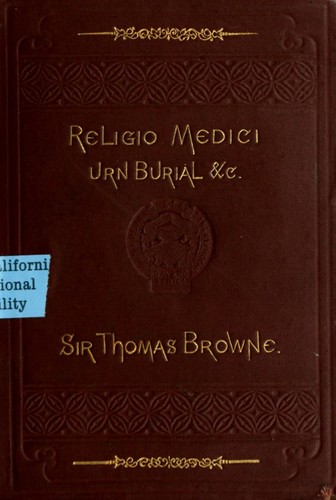
Religio medici
Thomas Browne
Summary (Spoiler-Free)
In 'Religio Medici,' Thomas Browne embarks on a profound exploration of faith, reason, and the human condition. Written in a reflective and philosophical style, Browne delves into the intricacies of belief and spirituality, examining the interplay between science and religion. This introspective work invites readers to ponder the mysteries of existence while offering a glimpse into the mind of a 17th-century thinker grappling with the complexities of his era.
Who Should Read This
If you enjoy contemplative literature that challenges the boundaries between science and spirituality, this book may resonate deeply with you. Browne's eloquent prose and philosophical musings make it a rewarding read for those who appreciate rich, introspective narratives.
Frequently Asked Questions
Is 'Religio Medici' part of a series, and how does it fit into the reading order?+
'Religio Medici' is a standalone work by Thomas Browne, meaning it does not belong to a series. As such, readers can approach it independently, without needing to read any prior texts to understand or appreciate its themes. The book’s content is self-contained, allowing readers to engage with Browne's unique perspectives on faith and philosophy without any prerequisite knowledge of his other writings.
What kind of audience is this book appropriate for?+
This book is primarily suited for adult readers, particularly those with an interest in philosophy, theology, and the history of ideas. It contains rich, complex language reflective of its 17th-century origins, which may require careful reading and contemplation. While the themes are universal, readers should be prepared for an intellectual engagement with concepts that may challenge contemporary perspectives on faith and reason.
Are there any adaptations of 'Religio Medici' available, such as audiobooks or films?+
Currently, 'Religio Medici' does not have any major film adaptations, but the text is available in various formats, including printed editions and audiobooks. The audiobook format can be particularly beneficial for those who prefer to engage with Browne's rich prose through listening, allowing for a different appreciation of his lyrical style. Additionally, various academic discussions and lectures about Browne’s work can be found online, enhancing the reader's experience and understanding.
What distinguishes 'Religio Medici' from other philosophical works of its time?+
'Religio Medici' stands out due to its unique blend of personal reflection and philosophical inquiry, making it a precursor to modern existential thought. Unlike many contemporaneous texts that adhere strictly to dogma, Browne's work is characterized by its openness and introspection. His ability to weave personal beliefs with broader philosophical questions creates a narrative that is both intimate and universal, inviting readers to explore their own beliefs in relation to the human experience.
What type of reader is likely to enjoy 'Religio Medici'?+
Readers who appreciate thoughtful, philosophical explorations of spirituality and the human experience will likely find 'Religio Medici' engaging. Those who enjoy delving into the complexities of faith, reason, and personal reflection will connect with Browne's eloquent prose. Additionally, individuals drawn to historical philosophical texts, particularly from the early modern period, will find this work both enlightening and rich in intellectual depth.
Similar Books You'll Love

0.0(0 ratings)
Rate this book:
Book at a Glance
~7 hr 48 min to read
- Pages
- 440
- First published
- 1642
- Original language
- EN