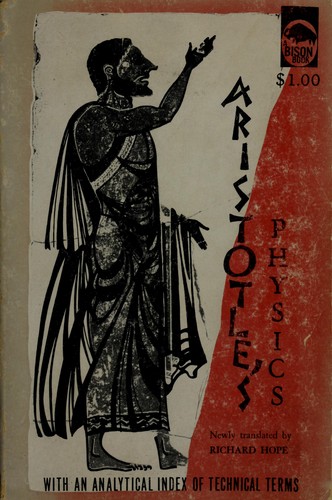
Physics
Aristotle
Summary (Spoiler-Free)
In 'Physics,' Aristotle explores the fundamental principles governing the natural world, delving into topics such as motion, causality, and the nature of space and time. This work is a cornerstone of Western philosophy, laying the groundwork for future scientific inquiry. Aristotle's systematic approach and logical reasoning invite readers to consider the underlying mechanisms of existence and the interplay between form and matter. Rich in thought-provoking concepts, 'Physics' challenges readers to engage deeply with the nature of reality.
Who Should Read This
If you enjoy contemplating the foundational questions of existence and the mechanics of the universe, 'Physics' is a thought-provoking read for you. This book offers a blend of insightful philosophy and early scientific thought that encourages a deeper understanding of the world around us.
Frequently Asked Questions
Is 'Physics' part of a series, and how does it relate to Aristotle's other works?+
'Physics' is a standalone work by Aristotle, not part of a series. However, it is often studied alongside his other philosophical texts, such as 'Metaphysics' and 'On the Heavens,' which explore complementary themes. Readers interested in Aristotle's comprehensive views on nature and existence will appreciate the interconnectedness of these works, as they build upon and reference each other, offering a broader understanding of his philosophical framework.
What audience is 'Physics' appropriate for, and are there any content considerations?+
'Physics' is primarily aimed at readers with an interest in philosophy, science, and the natural world. It is suitable for high school students, university students, and general readers who are curious about the roots of scientific thought. While the text can be dense and requires careful reading, it does not contain explicit content or mature themes. Readers should be prepared for complex ideas and terminology, making it more fitting for those with a foundational understanding of philosophical concepts.
Are there any adaptations or different formats available for 'Physics'?+
'Physics' has been published in various formats, including hardcover, paperback, and digital editions, making it accessible to a wide range of readers. Audiobook versions are also available, allowing listeners to engage with Aristotle's ideas in an auditory format. While there are no direct film adaptations of 'Physics,' its concepts have influenced numerous documentaries and educational programs that explore the history of science and philosophy. This accessibility in different formats enhances its reach and impact.
What makes 'Physics' distinct within the genre of philosophy?+
'Physics' is distinct in its systematic approach to understanding the natural world, combining philosophical reasoning with early scientific inquiry. Aristotle's methodical examination of nature, including discussions on change, time, and space, sets it apart from prior philosophical works that may lack empirical grounding. The text's influence spans centuries, shaping the course of scientific thought and philosophy alike. Its legacy continues to resonate in contemporary discussions about the intersection of science and philosophy, making it an essential read in understanding the evolution of these disciplines.
What kind of reader is likely to enjoy 'Physics' the most?+
Readers who enjoy exploring fundamental questions about existence, nature, and reality will likely find 'Physics' particularly engaging. Those with a background or interest in philosophy, science, or logic will appreciate Aristotle's analytical approach and the depth of his arguments. Additionally, individuals drawn to historical works that have significantly influenced modern thought will find value in this text, as it provides insight into the philosophical underpinnings of scientific inquiry that persist today.
Similar Books You'll Love

0.0(0 ratings)
Rate this book:
Book at a Glance
~8 hr 14 min to read
- Pages
- 464
- First published
- 1472
- Original language
- EN