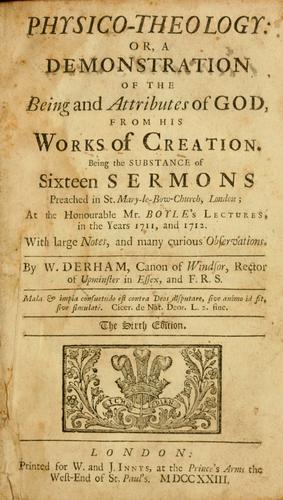
Physico-theology
William Derham
Summary (Spoiler-Free)
In 'Physico-theology', William Derham explores the relationship between science and religion, presenting a compelling argument for the existence of a divine creator through the lens of natural philosophy. The book intricately weaves observations from the natural world with theological insights, aiming to demonstrate that the complexity and order of nature point toward a higher power. Derham's work is a significant contribution to the discourse of its time, inviting readers to reconcile faith with empirical evidence and reason.
Who Should Read This
If you find yourself intrigued by the intersection of science and spirituality, 'Physico-theology' offers a thought-provoking journey that encourages deep reflection on the nature of existence. This book is for those who appreciate philosophical discourse that challenges conventional thinking and invites a dialogue between faith and reason.
Frequently Asked Questions
Is 'Physico-theology' part of a series or a standalone work?+
'Physico-theology' is a standalone work, not part of a series. Originally published in 1713, it reflects the intellectual climate of the early 18th century, where authors began to merge scientific inquiry with theological reflection. As such, readers can appreciate this text independently without needing to familiarize themselves with other works by Derham or related authors.
Who is the target audience for this book, and are there any content notes to consider?+
'Physico-theology' is targeted towards readers interested in philosophy, theology, and the natural sciences. It is particularly suitable for those who appreciate historical perspectives on the dialogue between science and faith. Readers should note that the language and ideas reflect the early 18th-century context, which may differ from contemporary views. The book discusses concepts of divinity and creation, which may resonate with readers of various faith backgrounds or those with a philosophical inclination.
Are there any adaptations available for 'Physico-theology', such as audiobooks or films?+
As of now, 'Physico-theology' has not been adapted into any films or contemporary media formats like audiobooks. However, considering its historical significance and philosophical depth, it is often discussed in academic settings and may be included in lectures or courses focused on the intersection of philosophy and theology. Interested readers may find various print editions available, and some academic libraries might offer additional resources or discussions surrounding its themes.
What distinct qualities does 'Physico-theology' possess within its genre?+
'Physico-theology' stands out in the philosophical genre due to its unique synthesis of empirical observation and theological argumentation. Derham's approach is characterized by a deep reverence for the natural world, presenting it as a testament to divine design. This blend of science and spirituality, particularly during an era where such discussions were emerging, offers a compelling perspective that differentiates it from purely philosophical or scientific texts of its time.
What kind of reader is likely to enjoy 'Physico-theology'?+
Readers who are drawn to philosophical explorations of existence and the interplay between science and religion will likely find 'Physico-theology' enriching. Those who appreciate historical texts that challenge modern assumptions and prompt introspection about the nature of creation and belief will resonate with Derham's work. This book may also appeal to scholars or students looking to understand the development of thought surrounding natural theology during the Enlightenment period.
Similar Books You'll Love

0.0(0 ratings)
Rate this book:
Book at a Glance
~7 hr 52 min to read
- Pages
- 444
- First published
- 1713
- Original language
- EN