Moll Flanders
Daniel Defoe
Summary (Spoiler-Free)
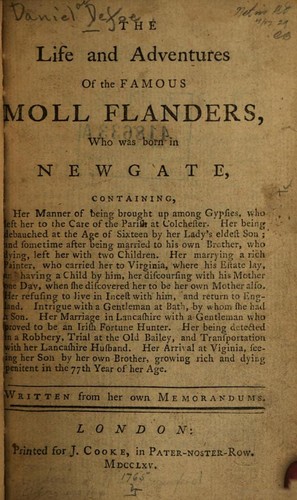
In 'Moll Flanders,' Daniel Defoe tells the compelling story of a woman born into poverty who navigates a tumultuous life filled with love, betrayal, and resilience. Set in 17th century England, Moll's journey takes her through a series of marriages, crimes, and social challenges as she seeks wealth and security. The novel explores themes of survival, social class, and the quest for personal agency, all while providing a vivid portrait of the struggles faced by women of that era.
Who Should Read This
If you enjoy richly detailed historical narratives and complex characters who defy societal norms, then 'Moll Flanders' might resonate with you. It's a thought-provoking exploration of morality and ambition through the lens of a resourceful woman.
Frequently Asked Questions
Is 'Moll Flanders' part of a series or a standalone work?+
'Moll Flanders' is a standalone novel, first published in 1722. It does not belong to a series, allowing readers to dive directly into Moll's unique and adventurous tale without needing prior context from other books. This independence makes it accessible to new readers who may not be familiar with Defoe's other works.
What audience is 'Moll Flanders' appropriate for, and are there any content notes?+
This novel is typically recommended for mature readers due to its themes of crime, marriage, and sexuality. While it provides a historical perspective on women's roles and societal expectations, it also features instances of deception and moral ambiguity. Readers should be aware that the book reflects the social norms of its time, which may include attitudes towards gender and class that differ significantly from modern perspectives.
Are there any adaptations of 'Moll Flanders' available in other formats?+
'Moll Flanders' has been adapted into various formats, including film and television. Notably, there are movie adaptations that bring Moll's spirited and tumultuous journey to life visually. Additionally, audiobooks are available, allowing listeners to experience Defoe's narrative through engaging performances that capture the essence of the story and its historical context.
What makes 'Moll Flanders' distinct within its genre?+
'Moll Flanders' stands out in the drama genre due to its unique protagonist who embodies the struggles and aspirations of women in a patriarchal society. Defoe's use of first-person narrative creates an intimate connection with readers, allowing them to experience Moll's thoughts and motivations directly. The novel's exploration of themes such as survival, morality, and the pursuit of wealth through unconventional means provides a rich tapestry that challenges traditional notions of virtue and vice.
What type of reader tends to enjoy 'Moll Flanders'?+
Readers who appreciate character-driven stories with a historical backdrop are likely to enjoy 'Moll Flanders.' Those who find value in exploring complex moral dilemmas and the resilience of individuals in the face of societal constraints will be particularly drawn to Moll's journey. Additionally, fans of classic literature that examines themes of gender, class, and personal ambition will find this novel to be a compelling read.
Similar Books You'll Love
0.0(0 ratings)
Rate this book:
Book at a Glance
~5 hr 45 min to read
- Pages
- 324
- First published
- 1722
- Original language
- EN