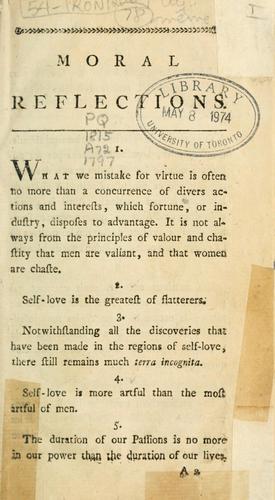
Maximes
François duc de La Rochefoucauld, Stuart D. Warner, Stéphane Douard, Jean Rohou
Summary (Spoiler-Free)
In 'Maximes', François duc de La Rochefoucauld presents a collection of insightful aphorisms that delve into human nature, morality, and social behavior. Through concise and thought-provoking statements, the work examines the complexities of relationships, ambition, and the often contradictory motives that drive us. This timeless piece invites readers to reflect on their own experiences and the paradoxes of life, presenting philosophy in a format that is both accessible and deeply resonant.
Who Should Read This
If you appreciate sharp, succinct observations about life and human behavior, 'Maximes' will likely resonate with you. This book is perfect for readers who enjoy philosophical reflections that provoke thought and foster introspection.
Frequently Asked Questions
What is the reading order for 'Maximes' within the context of its genre?+
As 'Maximes' is a standalone work, there is no required reading order for this book. However, it is often appreciated as part of a broader exploration of philosophical literature, particularly those that examine human behavior and ethics. Readers may find it enriching to engage with other philosophical texts that touch on similar themes. This allows for a deeper understanding of the historical context and the evolution of philosophical thought, but 'Maximes' itself stands alone as a compelling examination of its subjects.
Is 'Maximes' suitable for all audiences, and are there any content notes to consider?+
'Maximes' is suitable for readers who are comfortable with philosophical discourse and appreciate nuanced explorations of human nature. Given that it was published in the 17th century, some aphorisms may reflect outdated societal norms or perspectives. However, the themes of ambition, morality, and self-reflection remain relevant today. Readers should be prepared for a text that encourages critical thinking and may challenge contemporary views on ethics and relationships.
Are there any adaptations or different formats available for 'Maximes'?+
'Maximes' has not been formally adapted into film or television, but it is available in various formats, including print and digital editions. Additionally, audiobooks may be available for those who prefer listening. These formats can enhance accessibility, allowing a wider audience to engage with La Rochefoucauld's insights. The compact nature of the text makes it particularly well-suited for adaptations that emphasize the brevity and impact of each maxim.
What distinguishes 'Maximes' within the philosophy genre?+
'Maximes' is distinct due to its format of aphorisms, which conveys deep philosophical insights in a concise manner. This approach allows for quick reflections and encourages readers to ponder the complexities of human motives and morality. Unlike many philosophical works that delve into extensive arguments, La Rochefoucauld's sharp observations are often paradoxical and witty, making the text both engaging and thought-provoking. This unique style sets it apart from more traditional philosophical writings, appealing to those who appreciate brevity and depth.
What type of reader is likely to enjoy 'Maximes'?+
'Maximes' is likely to appeal to readers who enjoy philosophical reflection and appreciate literature that invites introspection. Those who are drawn to the complexities of human relationships and the moral dilemmas of life will find this work particularly engaging. Its aphoristic style attracts readers who prefer impactful, succinct statements over lengthy prose, making it suitable for both casual readers and those seeking deeper philosophical insights. This book is ideal for anyone interested in exploring the intricacies of human nature through a philosophical lens.
Similar Books You'll Love

0.0(0 ratings)
Rate this book:
Book at a Glance
~3 hr 3 min to read
- Pages
- 172
- First published
- 1694
- Original language
- EN