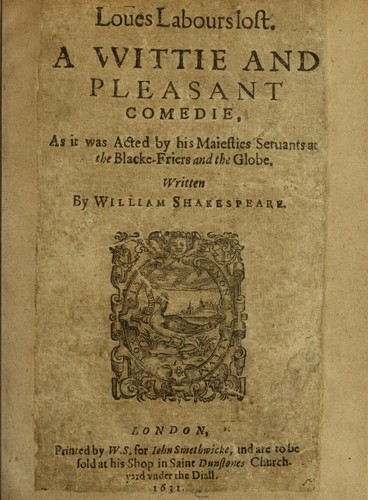
Love's Labour's Lost
William Shakespeare
Summary (Spoiler-Free)
In 'Love's Labour's Lost,' a group of young noblemen, led by Ferdinand, decides to forsake the company of women in favor of intellectual pursuits. However, their resolve is tested when they encounter the charming and witty ladies of the court, who cleverly challenge their vows. This delightful comedy explores themes of love, friendship, and the folly of human ambition, all wrapped in Shakespeare's signature wordplay and humor.
Who Should Read This
If you enjoy clever wordplay and witty banter, this play might be just what you’re looking for. It’s a delightful exploration of love and intellect that will resonate with those who appreciate Shakespeare's unique style.
Frequently Asked Questions
Is 'Love's Labour's Lost' part of a series, and how does it fit within Shakespeare's works?+
'Love's Labour's Lost' is a standalone play by William Shakespeare, written around 1598. It does not belong to any specific series, but it can be appreciated as part of Shakespeare's broader body of work, which includes several comedies, tragedies, and histories. This play is often grouped with his early comedic works and can be read alongside other romantic comedies for thematic and stylistic comparisons.
Who is the intended audience for 'Love's Labour's Lost,' and are there any content notes to consider?+
The intended audience for 'Love's Labour's Lost' includes both young adults and mature readers who appreciate classic literature and theater. While the play is generally suitable for most audiences, it does contain some themes of romantic pursuit, clever wordplay that may be more accessible to those familiar with early modern English, and occasional references that might benefit from contextual understanding. Readers who enjoy humorous dialogue and social commentary will likely find this play engaging.
Are there any adaptations or formats available for 'Love's Labour's Lost'?+
'Love's Labour's Lost' has been adapted into various formats, including film, stage productions, and even musical interpretations. There are notable film adaptations that capture the essence of the play while offering modern interpretations. Additionally, audiobooks and recorded theater performances provide accessible ways to experience this classic work, allowing audiences to enjoy Shakespeare's language and themes in different settings.
What distinguishes 'Love's Labour's Lost' within the comedy genre?+
'Love's Labour's Lost' stands out in the comedy genre due to its unique blend of intellectual humor and romantic entanglements. Unlike many of Shakespeare's other comedies that often conclude with marriage or reconciliation, this play features a more ambiguous ending, focusing instead on the pursuit of knowledge and the complexities of love. Its playful use of language, puns, and intricate wordplay showcases Shakespeare's mastery of comedic writing, making it a distinctive piece within his oeuvre.
What type of reader is likely to enjoy 'Love's Labour's Lost'?+
Readers who appreciate clever dialogue and the intricacies of relationships are likely to enjoy 'Love's Labour's Lost.' Fans of classic literature and those who revel in Shakespeare's innovative use of language will find much to admire. Additionally, individuals drawn to comedic explorations of love and friendship, especially with a touch of irony, will likely resonate with the themes presented in this play.
Similar Books You'll Love
0.0(0 ratings)
Rate this book:
Book at a Glance
~— to read
- Pages
- —
- First published
- 1598
- Original language
- EN