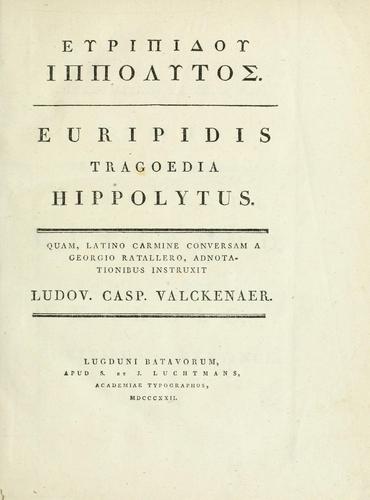
Hippolytus
Euripides, Euripides
Summary (Spoiler-Free)
In Euripides' haunting tragedy 'Hippolytus', the themes of love, desire, and betrayal intertwine to explore the complexities of human emotion. The play centers around Hippolytus, a devoted follower of Artemis, who is caught in a web of conflict when his stepmother, Phaedra, falls hopelessly in love with him. As the story unfolds, the consequences of passion and the struggle between divine and human desires lead to a tragic climax. This timeless work delves into the darker aspects of the human psyche and the often destructive nature of love.
Who Should Read This
If you relish intricate character studies and explore the depths of emotional turmoil, 'Hippolytus' will resonate deeply with you. This play invites thoughtful reflection on the moral implications of desire, making it an essential read for those drawn to classic literature and psychological drama.
Frequently Asked Questions
Is 'Hippolytus' part of a series, and how does it fit in the reading order of Euripides' works?+
'Hippolytus' is a standalone play by Euripides, meaning it does not belong to a series or sequence of works. While it is a part of the rich tapestry of Greek tragedies, readers can approach it independently without prior knowledge of Euripides' other plays. However, for a deeper appreciation, exploring his other works can enhance understanding of recurring themes and character archetypes he often employs.
What is the appropriate audience for 'Hippolytus', and are there any content notes to consider?+
'Hippolytus' is suitable for mature readers, given its exploration of complex themes such as lust, betrayal, and the consequences of unchecked desire. The play contains elements that may be sensitive for some, including sexual tension and tragic outcomes. Readers who appreciate historical and philosophical dimensions in literature will find this play particularly compelling, though it may not be appropriate for younger audiences due to its mature content.
Are there any adaptations of 'Hippolytus' available in other formats, such as film or audiobook?+
Yes, 'Hippolytus' has been adapted into various formats over the years, including stage productions, film interpretations, and audiobooks. These adaptations often seek to bring the timeless themes of the original text to contemporary audiences, offering different perspectives on the characters and their motivations. Audiobook versions can provide an engaging way to experience the dialogue and emotional nuance of the play, while film adaptations may offer visual interpretations that enhance the dramatic elements.
What distinguishes 'Hippolytus' within the drama genre?+
'Hippolytus' stands out in the drama genre for its profound psychological depth and exploration of the human condition. Euripides masterfully blends elements of tragedy with intricate character dynamics, making this work a compelling study of passion and its repercussions. The play's focus on the internal struggle between divine will and human desire sets it apart from other tragedies, showcasing Euripides' unique ability to probe the complexities of moral dilemmas and emotional conflict.
What type of reader is likely to enjoy 'Hippolytus'?+
Readers who appreciate classic literature, especially Greek tragedies, will likely find 'Hippolytus' captivating. Those interested in philosophical inquiries into human behavior, emotions, and ethical questions will resonate with the themes presented in the play. Additionally, individuals drawn to character-driven narratives that explore the darker aspects of love and desire will find much to engage with in this timeless work.
Similar Books You'll Love

0.0(0 ratings)
Rate this book:
Book at a Glance
~2 hr 59 min to read
- Pages
- 168
- First published
- 1756
- Original language
- EN