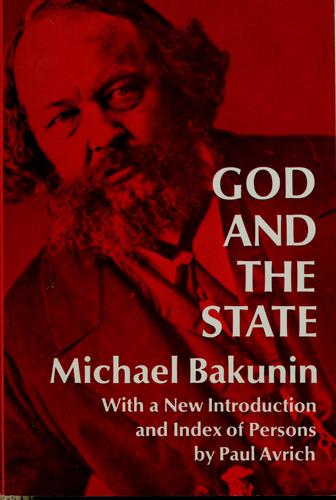
Dieu et l’État
Mikhail Aleksandrovich Bakunin
Summary (Spoiler-Free)
In 'Dieu et l'État,' Mikhail Bakunin presents a compelling critique of religion and its intersection with the state, arguing that both institutions serve to oppress individual freedom and autonomy. Through a philosophical lens, Bakunin explores the detrimental effects of dogma on human society and advocates for a revolutionary approach to achieving true liberty. This work is a foundational text in anarchist thought, emphasizing the importance of dismantling hierarchical structures in favor of a more egalitarian society.
Who Should Read This
If you find yourself questioning authority and the role of organized religion in society, this philosophical treatise may resonate deeply with you. Readers who appreciate challenging conventional beliefs and exploring radical ideas will likely find Bakunin's arguments both provocative and thought-provoking.
Frequently Asked Questions
Is 'Dieu et l'État' part of a series or a standalone work?+
'Dieu et l'État' is a standalone work by Mikhail Bakunin, published in 1882. While Bakunin wrote several influential texts throughout his life, this particular book does not belong to a series and can be read independently. Its focus on the relationship between religion and state power makes it a significant piece in the realm of anarchist philosophy and political thought.
What audience would find 'Dieu et l'État' appropriate for reading?+
This book is best suited for readers interested in philosophy, political theory, and critiques of societal structures. It contains complex ideas that may appeal to those studying or passionate about anarchism, atheism, or the philosophy of freedom. Given its historical context and depth, it may be more appropriate for mature audiences, particularly those with a background in or an interest in philosophical discourse.
Are there any adaptations of 'Dieu et l'État' available, such as audiobook or film?+
As of now, 'Dieu et l'État' has not been adapted into a film, but there are audiobook versions available for those who prefer to engage with the text through listening. These audiobooks often feature narrations that aim to capture the essence of Bakunin's philosophical arguments, making the work accessible to a wider audience. Readers interested in modern interpretations may find various discussions and analyses online, which can enhance understanding of the text.
What makes 'Dieu et l'État' distinct within its genre?+
'Dieu et l'État' stands out in the philosophical genre due to its direct confrontation with the intertwining of religious and state authority. Bakunin's passionate and unapologetic style, coupled with his radical views on individual freedom, distinguishes this work from other philosophical texts of the era. His arguments not only challenge prevailing norms but also lay the groundwork for future anarchist thought, making it a pivotal text for anyone interested in the evolution of political philosophy.
What type of reader would most enjoy 'Dieu et l'État'?+
Readers who are drawn to philosophical debates about freedom, authority, and the role of religion in society are likely to appreciate 'Dieu et l'État.' Those who enjoy dissecting complex ideas and engaging with revolutionary concepts will find Bakunin's work stimulating and insightful. This book tends to resonate with individuals who value critical thinking and are eager to explore the underpinnings of societal structures, making it a compelling read for the intellectually curious.
Similar Books You'll Love

0.0(0 ratings)
Rate this book:
Book at a Glance
~1 hr 57 min to read
- Pages
- 110
- First published
- 1882
- Original language
- EN