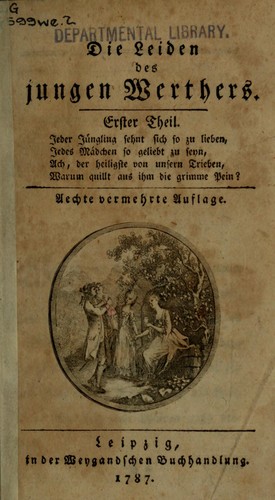
Die Leiden des jungen Werthers
Johann Wolfgang von Goethe
Summary (Spoiler-Free)
In 'Die Leiden des jungen Werthers,' the young artist Werther becomes enamored with the beautiful but unattainable Charlotte, who is already engaged to another man. This unrequited love plunges him into a deep emotional turmoil, exploring themes of passion, despair, and the complexities of human relationships. Set against a backdrop of nature and societal constraints, Goethe's work captures the essence of youthful idealism and the agony of longing.
Who Should Read This
If you are drawn to deeply emotional narratives that explore the intensity of human feelings and existential dilemmas, this book may resonate with you. It speaks to those who appreciate classic literature infused with romanticism and the struggles of the human spirit.
Frequently Asked Questions
Is 'Die Leiden des jungen Werthers' part of a series, and how should I read it?+
This novel is a standalone work, meaning you can read it independently without needing to delve into a series. Its self-contained narrative offers a complete exploration of Werther's turmoil and passion, allowing readers to fully engage with the text without prior context from other works. This makes it a great entry point for those new to Goethe or classic literature.
What audience is this book appropriate for, and are there any content notes?+
'Die Leiden des jungen Werthers' is generally suitable for mature readers due to its themes of unrequited love, mental anguish, and existential despair. The book delves into the emotional landscape of its protagonist, which may resonate deeply with some but could be triggering for others, particularly those sensitive to themes of depression and self-harm. It's often recommended for readers who can appreciate the complexities of human emotion and the darker aspects of romantic longing.
Are there any adaptations of this book, and in what formats can I find it?+
This iconic work has inspired various adaptations, including stage plays and films, reflecting its enduring influence on culture. Additionally, 'Die Leiden des jungen Werthers' is available in multiple formats, including print editions, e-books, and audiobooks. The audiobook format can provide a unique experience, especially with expressive narration that captures the emotional depth of Werther's character.
What makes 'Die Leiden des jungen Werthers' distinct in its genre?+
Goethe's novel is a poignant example of the Sturm und Drang movement, which emphasizes emotion and individualism as a response to the rationalism of the Enlightenment. Its introspective nature and exploration of the human condition set it apart from other works of its time, creating a bridge to modern psychological literature. The raw depiction of Werther's feelings for Charlotte and his subsequent struggles make it a compelling study of romantic idealism, contributing to its status as a seminal work in drama and literature.
What kind of reader tends to enjoy 'Die Leiden des jungen Werthers'?+
Readers who appreciate profound emotional exploration and character-driven narratives are likely to find enjoyment in this book. Those drawn to the intricacies of love, suffering, and existential questions will resonate with Werther's experiences. Additionally, fans of classic literature and romanticism, who appreciate lyrical prose and philosophical undertones, will likely find this work particularly engaging.
Similar Books You'll Love

0.0(0 ratings)
Rate this book:
Book at a Glance
~4 hr 44 min to read
- Pages
- 267
- First published
- 1779
- Original language
- —