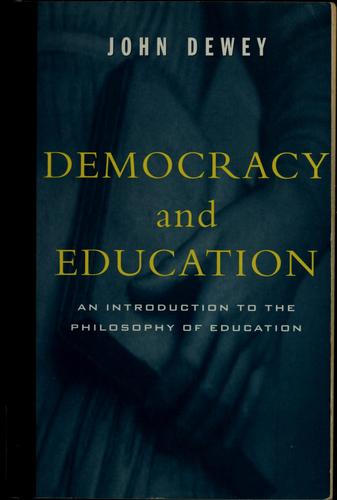
Democracy and Education
John Dewey
Summary (Spoiler-Free)
In 'Democracy and Education,' John Dewey explores the intricate relationship between education and societal progress, advocating for a system that nurtures democratic ideals. He argues that education should not merely be about rote learning but should foster critical thinking and active participation in civic life. Through a philosophical lens, Dewey examines the role of schools in shaping individuals who are equipped to contribute meaningfully to their communities and the broader society.
Who Should Read This
This book is perfect for readers interested in the intersection of education and philosophy, particularly those who seek to understand how educational practices can influence democratic societies. If you appreciate thought-provoking discussions about the role of education in personal and social development, this work will resonate deeply with you.
Frequently Asked Questions
Is 'Democracy and Education' part of a series, and how does it fit into the broader context of educational philosophy?+
'Democracy and Education' is a standalone work, not part of a series. However, it is often regarded as a cornerstone text in educational philosophy and Dewey's broader body of work. Dewey’s theories on experiential learning and the democratic process have influenced countless educational reforms and pedagogical approaches, making this book a vital read for anyone interested in the evolution of educational thought.
What audience is 'Democracy and Education' appropriate for, and are there any content considerations?+
This book is primarily suited for readers with an interest in philosophy, education, and social theory. It is particularly relevant for educators, policymakers, and students in related fields. Dewey’s writing can be dense and requires thoughtful engagement, so it may be more appropriate for advanced high school students and adults. Readers should be prepared for a deep dive into philosophical concepts, which may require some prior knowledge of educational theory.
Are there any adaptations or formats available for 'Democracy and Education'?+
Yes, 'Democracy and Education' is available in various formats, including print and digital editions. Additionally, there are audiobook versions that make it accessible for those who prefer listening. While the book has not been adapted into films or other media, its themes continue to be discussed in educational forums and conferences, highlighting its enduring relevance.
What makes 'Democracy and Education' distinct within the philosophy genre?+
'Democracy and Education' stands out due to its unique combination of philosophy and practical application in the realm of education. Dewey's approach emphasizes the importance of experiential learning and the role of education in fostering democratic citizenship. Unlike many philosophical texts that remain abstract, Dewey grounds his theories in real-world implications, making his arguments both accessible and applicable to contemporary educational practices.
What kind of reader tends to enjoy 'Democracy and Education'?+
Readers who appreciate deep philosophical inquiries into the nature of education and its societal impact will likely find 'Democracy and Education' engaging. Educators, philosophers, and anyone interested in progressive education methods will be drawn to Dewey’s insights. Additionally, those who enjoy exploring how theory translates into practice in the real world will find this book particularly rewarding.
Similar Books You'll Love

0.0(0 ratings)
Rate this book:
Book at a Glance
~7 hr 42 min to read
- Pages
- 434
- First published
- 1916
- Original language
- EN