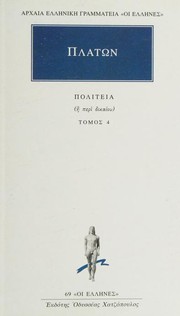
Παρμενίδης
Plato
Summary (Spoiler-Free)
In 'Παρμενίδης', Plato engages with profound philosophical inquiries, exploring the nature of reality, being, and the complexities of knowledge. Through a dialogue primarily between the character of Parmenides and a young Socrates, the text delves into the tension between the world of forms and the empirical world. This work challenges readers to confront fundamental questions about existence and the limitations of human understanding, making it a cornerstone of Western philosophical thought.
Who Should Read This
This book is a thought-provoking read for those who enjoy deep philosophical discussions and are curious about the concepts of being and non-being. If you appreciate dialogues that stimulate critical thinking, you'll likely find this work deeply engaging.
Frequently Asked Questions
Is 'Παρμενίδης' part of a series, and does it need to be read in a specific order?+
'Παρμενίδης' is a standalone work by Plato and does not belong to a series. Readers can approach it independently without needing prior knowledge of Plato's other dialogues. However, familiarity with Socratic philosophy and previous dialogues may enhance understanding, as many themes and concepts recur throughout Plato's body of work.
What audience is this book appropriate for, and are there any content considerations?+
'Παρμενίδης' is best suited for readers with an interest in philosophy, particularly those studying ancient Greek thought. The text contains complex ideas that may be challenging for younger audiences or those unfamiliar with philosophical terminology. As it deals with abstract concepts, readers should be prepared for dense discussions and a lack of traditional narrative structure.
What formats are available for 'Παρμενίδης', and are there any adaptations?+
'Παρμενίδης' is available in various formats, including print, e-book, and audiobook. The audiobook can be particularly beneficial for those who prefer auditory learning, as it allows for deeper engagement with the dialogue's intricate ideas. While there may not be a direct film adaptation, concepts from this work have influenced numerous philosophical discussions and adaptations in literature and media.
What makes 'Παρμενίδης' distinct within the philosophy genre?+
'Παρμενίδης' stands out for its rigorous examination of metaphysical concepts and the nature of reality. Plato's use of dialogue as a literary form allows for a dynamic exploration of philosophical ideas, contrasting with more straightforward expository texts. This work specifically challenges the reader to consider the implications of Parmenides' arguments on existence and knowledge, making it a significant piece in the study of metaphysics.
What kind of reader tends to enjoy 'Παρμενίδης'?+
Readers who find joy in intellectual exploration and enjoy dissecting philosophical arguments are likely to appreciate 'Παρμενίδης'. Those who are curious about the origins of Western thought and are comfortable with abstract reasoning will find this text particularly rewarding. It appeals to scholars, students, and anyone seeking to deepen their understanding of fundamental philosophical questions regarding existence and knowledge.
Similar Books You'll Love

0.0(0 ratings)
Rate this book:
Book at a Glance
~5 hr 57 min to read
- Pages
- 336
- First published
- 1728
- Original language
- EN