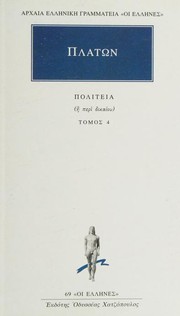
Γοργίας
Plato
Summary (Spoiler-Free)
In 'Γοργίας,' Plato explores the nature of rhetoric, justice, and the moral responsibilities of the individual. Through a series of dialogues, Socrates engages various figures, including the sophist Gorgias and Callicles, to challenge their views on power and persuasion. This philosophical work delves into the distinction between true knowledge and mere opinion, questioning the ethical implications of using rhetoric without virtue.
Who Should Read This
This book is ideal for readers who enjoy deep philosophical inquiries and are intrigued by the dynamics of power and morality. If you appreciate discussions that challenge conventional ideas and provoke critical thinking, 'Γοργίας' will resonate with you.
Frequently Asked Questions
Is 'Γοργίας' part of a series, or can it be read as a standalone?+
'Γοργίας' is a standalone work by Plato, meaning it does not belong to a series. Readers can dive into this text without needing prior exposure to other works by Plato or the dialogues. This accessibility makes it a great entry point for those new to philosophical literature, as well as a valuable addition for seasoned readers of Plato seeking to explore his thoughts on rhetoric and ethics.
What age group or audience is 'Γοργίας' appropriate for?+
'Γοργίας' is generally suited for mature readers, particularly those interested in philosophy, ethics, and political thought. The discussions contained within can be complex and may challenge readers to think critically about morality and the use of power. While it's not explicitly graphic or inappropriate, the themes and arguments presented may resonate more with high school students, college students, and adults who are prepared to engage with abstract concepts.
Are there any adaptations or different formats available for 'Γοργίας'?+
'Γοργίας' is available in various formats, including print and digital editions, making it accessible to a wide audience. Additionally, audiobooks may be available, providing an alternative way to engage with Plato's philosophical dialogues. While there may not be mainstream film adaptations, its themes have influenced various works in literature and media, reflecting its lasting impact on philosophical discourse.
What makes 'Γοργίας' distinct within the genre of philosophical works?+
'Γοργίας' stands out due to its critical examination of rhetoric and its ethical implications. Unlike many philosophical texts that focus solely on abstract concepts, Plato's dialogue engages directly with the practicalities of persuasion and the responsibilities that come with it. This makes it particularly relevant not only in philosophical discussions but also in contexts like politics and media, where rhetorical skills play a crucial role in shaping public opinion.
What type of reader is likely to enjoy 'Γοργίας'?+
Readers who are drawn to philosophical debates and enjoy dissecting moral dilemmas will likely find 'Γοργίας' captivating. Those who appreciate texts that challenge their thinking and provide rich, layered arguments will find this dialogue especially rewarding. Additionally, individuals intrigued by the interplay between ethics and rhetoric, or who have an interest in classical philosophy, will find much to ponder in Plato's exploration of these themes.
Similar Books You'll Love

0.0(0 ratings)
Rate this book:
Book at a Glance
~2 hr 6 min to read
- Pages
- 118
- First published
- 1827
- Original language
- EN